







Are you looking for a smoother, more comfortable boating experience? SeaKeeper and SeaKeeper Ride—sometimes used interchangeably, sometimes presented as totally different systems. They’re related, but they solve different problems in different ways.
In this guide, we’ll break down the difference between SeaKeeper and SeaKeeper Ride, what each system is designed to do, who benefits most, and how to choose the right option for your boat and boating style.
Quick Definition: SeaKeeper vs. SeaKeeper Ride
What is SeaKeeper?
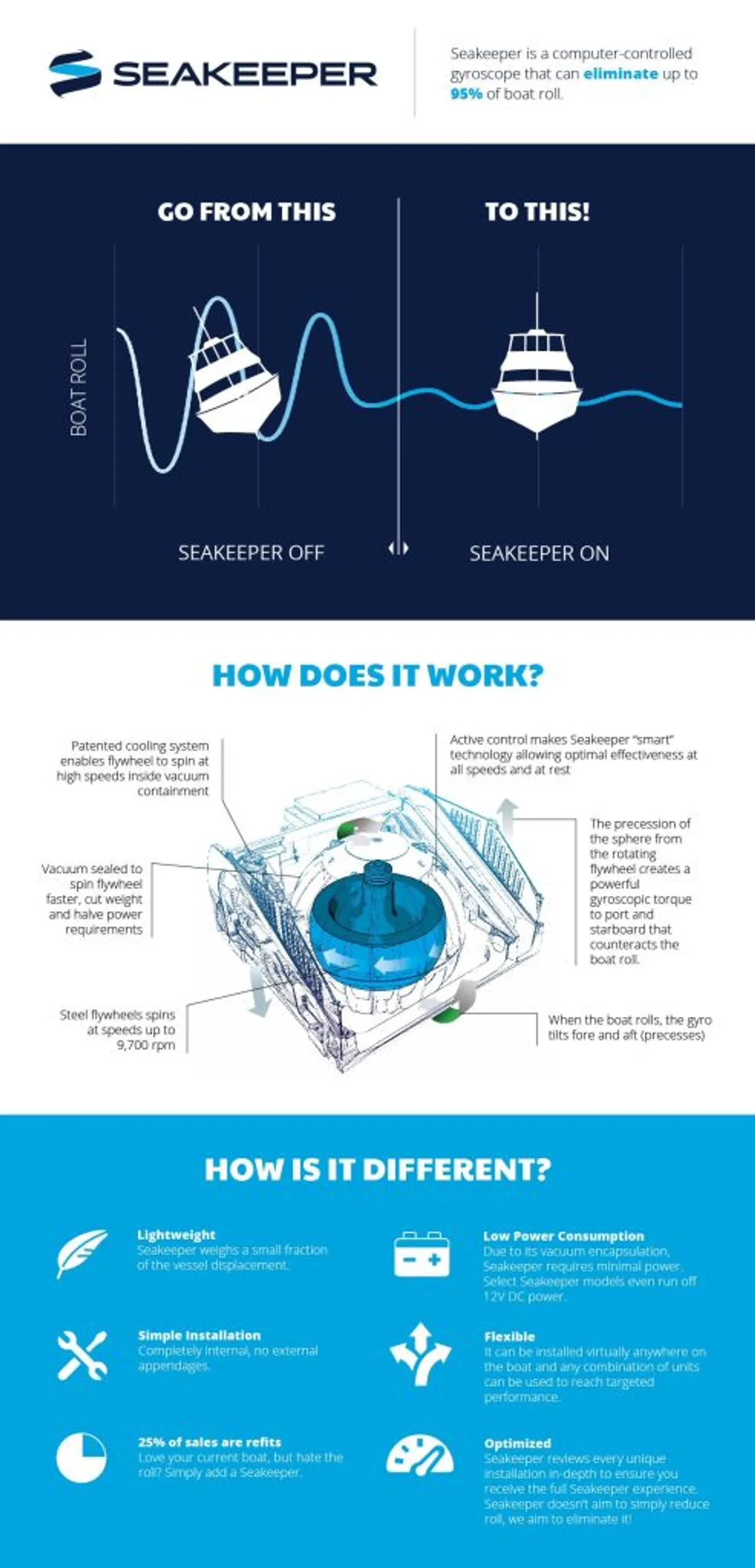
SeaKeeper (often called “SeaKeeper gyro”) is a gyroscopic stabilizer installed inside the boat. It primarily targets roll stabilization—that side-to-side rocking motion that can make people uncomfortable at rest, at anchor, or while underway in choppy conditions.
What is SeaKeeper Ride?
SeaKeeper Ride is an active trim and ride control system mounted on the transom (the back of the boat). It uses sensors and fast-acting controllers to reduce pitch (bow up/down), roll (side-to-side), and yaw (side-to-side steering wander) while you’re on plane. It’s about improving the boat’s running attitude and comfort at speed.
The Core Difference: What Motion Are You Trying to Fix?
When boaters say “I want a smoother ride,” they might mean several different things. The best choice depends on the motion you dislike most—and when you experience it.
SeaKeeper is best for “at rest” and low-speed comfort
SeaKeeper Ride is best for “on plane” performance and comfort
How SeaKeeper Works (Gyro Stabilization)
SeaKeeper gyros create stabilizing torque using a rapidly spinning flywheel inside a vacuum-sealed sphere. When the boat begins to roll, the gyro resists that motion through controlled precession—pushing back against the roll and helping the boat stay flatter.
What you’ll feel with SeaKeeper
- Less “rocking chair” motion when you’re stopped
- More comfortable time at anchor, at the sandbar, or while bottom fishing
- Less fatigue for the crew during long days on the water
Typical best-fit boats for SeaKeeper
- Center consoles and dual consoles that spend time drifting or at anchor
- Sportfishing boats that fish in open water
- Cabin cruisers where comfort at rest matters (meals, sleeping, kids onboard)
How SeaKeeper Ride Works (Active Ride Control)
SeaKeeper Ride uses a network of sensors (measuring acceleration and boat attitude) and electronically controlled “blades” on the transom. The system makes rapid adjustments—many times per second—to keep the boat running more level and controlled.
What you’ll feel with SeaKeeper Ride
- Faster planing and less bow rise (better visibility and comfort)
- More stable running in quartering seas (waves from behind/side)
- Less pounding and less side-to-side “wobble” at speed
- Smoother turns and less driver correction
Typical best-fit boats for SeaKeeper Ride
- Performance-oriented center consoles that run long distances
- Boats that frequently cruise on plane in mixed conditions
- Owners who care about efficiency, control, and passenger comfort while underway
SeaKeeper vs. SeaKeeper Ride: Side-by-Side Comparison
1) Best use case
- SeaKeeper: Best at rest and low speed; excellent roll reduction
- SeaKeeper Ride: Best while on plane; improves running attitude and control
2) Installation location
- SeaKeeper: Installed inside the hull (requires space, structure, and planning)
- SeaKeeper Ride: Mounted on the transom (external hardware plus control module)
3) Motions addressed
- SeaKeeper: Primarily roll
- SeaKeeper Ride: pitch, roll, and yaw while underway
4) Power and complexity
- SeaKeeper: Higher power draw; more substantial install; ongoing maintenance considerations
- SeaKeeper Ride: Generally simpler than a gyro install; designed to be efficient and responsive
5) Budget expectations
Pricing varies widely by boat size, model, and install requirements. As a general rule, a full gyro stabilization package is typically a larger investment than an active transom-mounted ride control system—though the value can be enormous if you spend a lot of time at rest in rolling conditions.
Which One Do You Need? 5 Questions to Decide Fast
1) Do you get uncomfortable mostly at anchor or while drifting?
If the worst motion happens when you’re stopped—fishing, hanging at the sandbar, waiting on a bridge—SeaKeeper is usually the most satisfying solution.
2) Do you run long distances on plane and want a smoother ride at speed?
If your priority is comfort and control while cruising fast, SeaKeeper Ride is often the better match.
3) What kind of water do you run most often?
- Beam seas and swell at rest: SeaKeeper shines
- Short-period chop while running: SeaKeeper Ride can make a dramatic difference
4) How much interior space and install flexibility do you have?
Gyros require dedicated space, structural considerations, and access for service. If space is tight or the boat’s layout makes a gyro install complicated, SeaKeeper Ride may be the practical path to a more comfortable ride.
5) Are you optimizing for entertaining, fishing, or performance?
- Entertaining/rafting up: SeaKeeper for “floating comfort”
- Offshore fishing (drift/anchor time): SeaKeeper for stability while working lines
- Performance cruising and long runs: SeaKeeper Ride for confidence and control
Do You Ever Need Both?
Some boaters choose both systems because they address different phases of boating:
- SeaKeeper keeps the boat calmer when you’re stopped or moving slowly.
- SeaKeeper Ride improves comfort and handling when you’re running on plane.
If you do a lot of offshore days that include long runs and long periods of drift fishing or hanging at anchor, a combined approach can deliver “best of both worlds” comfort.
SeaKeeper and SeaKeeper Ride on Performance Boats
Performance boaters often focus on speed, efficiency, and control—especially when conditions get sporty. If that sounds like you, it’s worth thinking beyond “stabilization” as a single category and instead matching the system to your real use.
For example, if you love offshore-capable performance hulls and want to explore what makes them so popular, you might enjoy Top 5 Reasons to Buy a Fountain Boat (And Why Performance Boaters Love Them). Many of the same priorities—comfort at speed, confidence in chop, and smart rigging—connect directly to the SeaKeeper vs. SeaKeeper Ride decision.
Common Myths (So You Don’t Buy the Wrong System)
Myth #1: “SeaKeeper Ride is just a smaller SeaKeeper.”
No—these are different technologies. SeaKeeper is a gyro. SeaKeeper Ride is an active ride control system. They can complement each other, but they aren’t interchangeable.
Myth #2: “If I buy a gyro, I don’t need trim control.”
A gyro can reduce roll significantly, but it doesn’t replace the benefits of active pitch and yaw control while on plane. If your main complaint is pounding or bow rise at speed, you’ll want to look hard at SeaKeeper Ride (or other ride control solutions).
Myth #3: “SeaKeeper Ride is only for speed demons.”
Not necessarily. Even moderate cruising speeds can feel dramatically smoother when the boat stays level and reacts quickly to changing seas and passenger movement.
Buying Tips: How to Spec the Right System
Talk through your “day on the water”
Before you pick SeaKeeper vs. SeaKeeper Ride, describe your typical outing:
- How long are your runs?
- How much time do you spend at anchor or drifting?
- What sea conditions are most common?
- Do you boat with kids, guests, or anyone prone to seasickness?
Be honest about your top pain point
If you’re trying to solve everything with one purchase, it’s easy to end up underwhelmed. Decide whether your #1 problem is:
- Roll at rest (go gyro)
- Ride quality and control at speed (go Ride)
Consider resale and “must-have” features
On many late-model boats, stabilization and ride control are becoming high-value features that buyers actively search for. Choosing the right system for your boat type can improve both enjoyment now and desirability later.
FAQs: SeaKeeper vs. SeaKeeper Ride
Does SeaKeeper help while underway?
Yes. SeaKeeper can provide roll reduction underway, especially in beam seas. But its biggest “wow factor” is often at rest.
Does SeaKeeper Ride work at anchor?
SeaKeeper Ride is designed primarily for on-plane operation. It’s not a replacement for a gyro if your main issue is rocking at rest.
Which is better for seasickness?
If seasickness happens mostly while stopped or drifting, SeaKeeper is often the better fit. If it happens during rough, on-plane runs, SeaKeeper Ride can help by keeping the boat more level and controlled.
Bottom Line: SeaKeeper vs. SeaKeeper Ride
Choosing between SeaKeeper and SeaKeeper Ride comes down to when you want comfort most:
- Choose SeaKeeper if your priority is reducing roll at anchor, at rest, and during slow-speed drifting.
- Choose SeaKeeper Ride if you want a smoother, more controlled ride on plane with less pitch, roll, and yaw while running.
- Consider both if you split your time between long offshore runs and long periods of fishing or relaxing at rest.